Today’s Internet is based on the exchange of classical bits. The key idea of the Quantum Internet is to extend this classical Internet with quantum communication, which is based on the exchange of quantum bits (qubits). A quantum internet offers a number of important (networking) applications, including defense against eavesdroppers (also if they own a quantum computer), clock synchronization, distributed consensus, and secure identification.
These applications are based on fundamental properties of qubits, which unlike regular bits can be in a superposition of 0 and 1 at the same time. Qubits cannot be copied, and any attempt to read the state of a qubit can be detected. Furthermore, two qubits can be entangled, which forms the basis for ‘teleporting’ shared (quantum) state across devices, which in turn is a key ingredient of many quantum communication applications.
RelatedPosts

In this project, we take a full stack perspective on Quantum Internet applications. Starting from developers who would like to create Quantum Internet applications, we aim to design, implement, and evaluate a series of (layered) abstractions that expose or hide key quantum communication characteristics. These abstractions will in particular deal with managing (series of) entangled qubits across nodes. Due to the complex physical setting, naive abstractions would be leaky, requiring knowledge about details and limitations of its underlying implementation that should in fact be hidden away.
The candidate we are looking for has a strong background in computer science, combined with an interest in multi-disciplinary research, physics, and telecommunication. Relevant background expertise includes distributed systems, software architecture, design patterns, REST, and systems programming. Candidates have a passion for software development, a hands-on attitude, and a desire to experiment with different alternative designs.
The project takes place at #PhD #Position on #Programming #Paradigms for the #Quantum #Internet @QuTech
VIDEO/ Bătaie pe Calea Victoriei: Tolea Ciumac, confruntare dură cu Daniel „Spartanu”

Ai o poveste interesantă sau un business care merită cunoscut? RubySkyNews te invită la interviu

Tragedia de la Măgdăcești: Ce pot face femeile agresate pentru a se proteja înainte să fie prea târziu

VIDEO/ Moldoveanul Ion s-a căsătorit cu Delphine din Camerun.

VIDEO / TEROARE la Râșcani: Administrator de restaurant snopit în bătaie de doi indivizi.

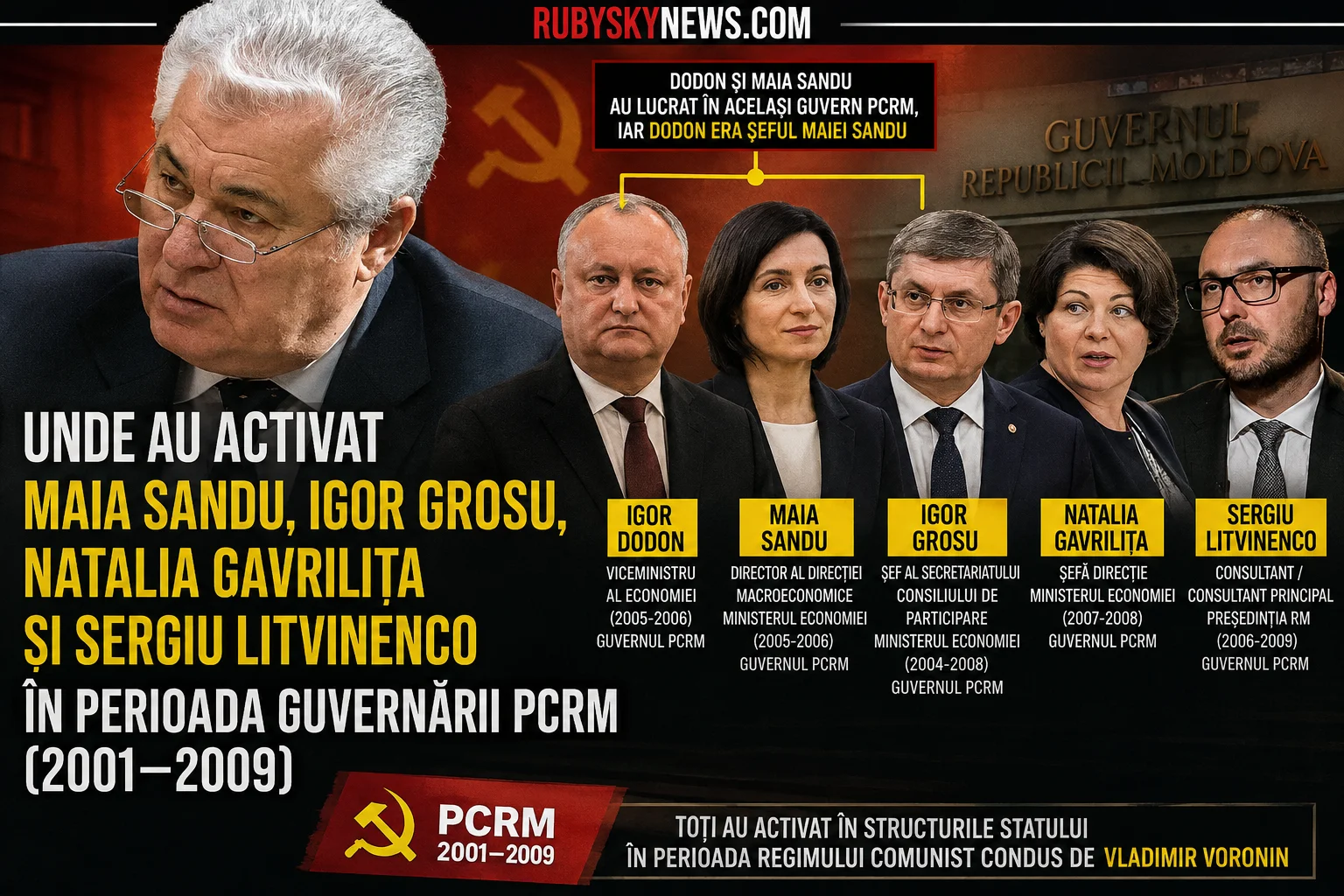
Unde au activat Maia Sandu, Igor Grosu, Natalia Gavrilița și Sergiu Litvinenco în perioada guvernării PCRM (2001–2009)